
Here in Rockingham County, we see it all the time: a majestic old oak suddenly leaning after a storm, heavy limbs hanging over a roof, or branches growing dangerously close to power lines. As an arborist, I know that what looks like a simple tree problem can often be a serious safety risk.
Many people think tree cutting is just about firing up a chainsaw and taking down wood. But when you’re dealing with a hazardous tree, it’s really about managing risk, protecting people, and preventing thousands of dollars in property damage. This is where professional expertise becomes so important. I want to walk you through how we, as trained arborists, evaluate and handle dangerous trees, and explain why experience and the right safety equipment are non-negotiable.
What Makes a Tree “High Risk”?
A tree can become a hazard for many reasons. Sometimes the signs are obvious, but other times the real danger is hidden. When I arrive at a property, I’m looking for specific red flags that tell me a tree is high-risk.
Dead or hanging tree limbs are a major concern. These are often the first to break and fall during a storm or even on a calm day. It’s also important to remove branch stubs during tree cutting, as leaving stubs can promote disease and negatively affect the tree’s structure. I also inspect the tree’s trunk for cracks, deep cavities, or signs of decay like fungus growth. Once the tree canopy is no longer covered by leaves, especially in autumn, it’s easier to inspect the canopy for hidden issues and better assess the tree’s health.
Another critical factor is the tree canopy; an unbalanced canopy with all the weight on one side can put immense stress on the tree, making it unstable. Opening up the canopy allows for increased light and air circulation, which decreases the risk of disease. The scary part is that a tree can look perfectly healthy on the outside while being dangerously decayed on the inside.
How We Assess a Tree Before We Cut
Before a single cut is made, a thorough plan is essential. My assessment process is meticulous because safety depends on it. I start by examining the entire structure, from the base of the trunk to the tips of the tree limbs. I evaluate how the tree branches are connected, their weight, and the overall health of the tree crown. It’s important to note the specific condition of the tree and its surroundings, documenting any hazards or unique features to ensure safe and effective tree cutting.
Next, I survey the surrounding area. Is the tree near a house, a fence, a driveway, or power lines? What is the ground like? Before cutting, I clear out brush, branches, smaller trees, and downed logs right next to the stump of the tree to be cut. A tree that could fall harmlessly in an open field becomes a complex challenge when it’s in a tight residential space. Every cut starts with a detailed plan, not just a running chainsaw.
We develop a comprehensive strategy for pruning or removal, especially during the dormant season, to promote tree health and safety. Planning to cut the tree safely means considering all hazards, including tree health, lean, proximity to power lines, and loose limbs. It’s also critical to plan two escape paths opposite the planned direction of the fall to ensure the sawyer’s safety. We have to account for every variable to prune trees or remove them without causing damage.
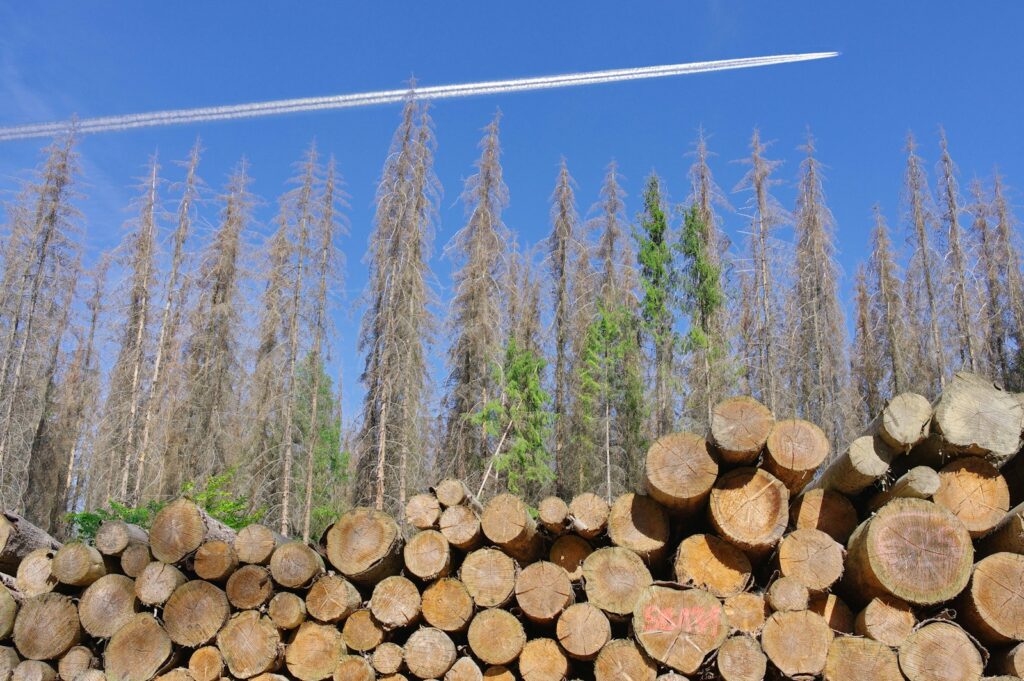
Photo by Immo Wegmann on Unsplash
Safety Equipment and Gear Professionals Use
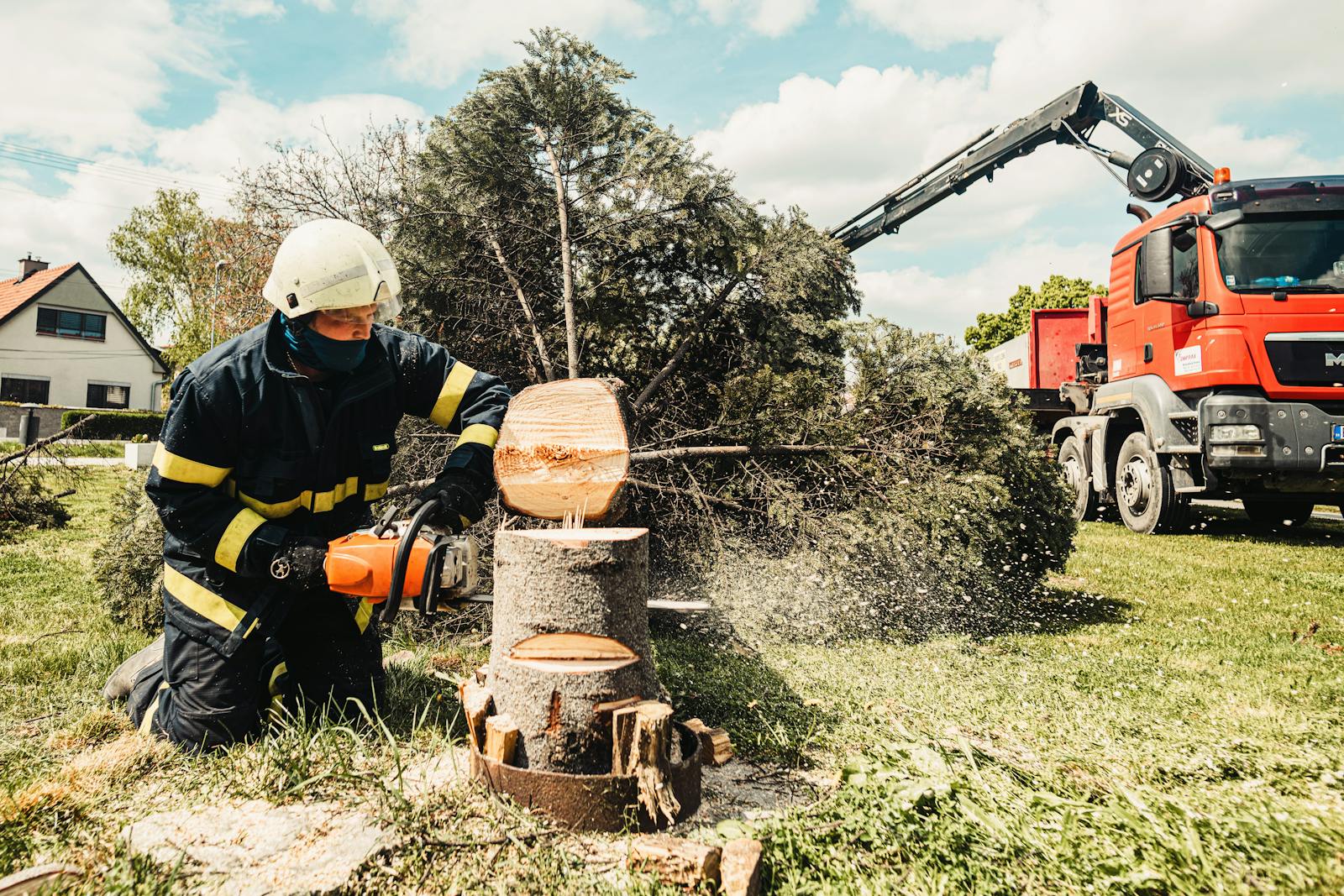
When it comes to cutting and trimming trees, safety is always the top priority for professionals. Every job—whether it’s pruning tree limbs, removing dead branches, or tackling a full tree felling—starts with the right safety equipment. This gear isn’t just for show; it’s essential for protecting both the crew and your property from the unpredictable risks that come with working around trees.
Before a single branch is cut, you’ll see our team suited up with hard hats and safety glasses to guard against falling branches and flying debris. Chainsaw chaps are a must, shielding legs from accidental contact with a saw chain during cutting. Ear protection is standard, too, since the roar of saws can be relentless, especially when cutting firewood or working on large trees.
For jobs that require reaching high into the tree canopy or accessing tricky spots, we rely on specialized equipment like tree climbing harnesses, sturdy ropes, and bucket trucks. This allows us to carefully cut limbs and branches—even those tangled near power lines or perched above a house—while keeping everyone safely anchored and in control. When temperatures drop and snow or other debris covers the ground, we adjust our approach, using extra caution to prevent slips and to protect the tree and surrounding foliage from unnecessary damage.
Our safety protocols extend beyond personal gear. We always have first aid kits and emergency communication devices on hand, and we keep fire extinguishers nearby when working with saws and other power equipment. Every tool, from pruning saws to chainsaws, is meticulously maintained according to the owner’s manual, ensuring reliable performance and reducing the risk of accidents.
Professionals also pay close attention to the tree’s location and condition. Before making the first cut, we assess for hazards like dead limbs, leaning trunks, or the presence of power lines. If a tree is near a power line, we coordinate with the power company to ensure the area is safe before any work begins. We also watch for other debris—like snow, broken branches, or forest undergrowth—that could complicate the job or create new risks.
By using the right safety equipment and following strict protocols, we’re able to prune trees, remove dead wood, and cut trees safely—even in challenging conditions. This attention to detail not only protects our crew but also helps prevent damage to your house, landscaping, and the healthy trees you want to keep. It’s this level of care and preparation that sets professional tree cutters apart, ensuring every job is done safely, efficiently, and with respect for your property and the environment.
Why Tree Cutting Is Not a DIY Job
I understand the desire to save money and handle things yourself. However, when it comes to tree cutting—especially with large branches or leaning trees—the risks are simply too high. I’ve seen DIY attempts go terribly wrong, resulting in serious injury or catastrophic property damage. Chainsaws are recognized as the most hazardous power hand tool, and personal protective equipment (PPE) is highly recommended whenever using one.
Professional-grade safety equipment is just the start. Always read and follow the owner’s manual for all equipment to ensure safe operation and proper maintenance. It’s also about knowing how to maintain a saw chain for a clean, efficient cut—plus checking and cleaning the air filter regularly to ensure optimal performance and safety. Understanding the physics of cutting angles to control a falling limb is crucial. Working near power lines is one of the most dangerous situations.
In these cases, the power company must be involved to de-energize the lines before any work can begin. It’s a level of coordination and knowledge that comes only with professional training. Hiring an unqualified or uninsured tree cutter is just as risky; if something goes wrong, you could be left liable.
The Professional Cutting Process: Step by Step
Tree cutting operations involve three basic processes: felling, limbing, and bucking, each requiring specialized tools such as saws, pruners, and climbing equipment for safe and effective results.
Proper tree felling is a science. Our goal is to control the tree’s fall with absolute precision. The very first cut is made on the side of the tree toward which it will fall, creating a V-shaped notch cut of 70-90 degrees, cutting about 1/4 to 1/3 of the trunk's diameter. The felling cut, also known as the back cut, is then made on the opposite side of the tree from the face cut, approximately 1-2 inches higher than the notch corner.
This back cut releases the stresses on the back of the tree, allowing it to fall, while leaving a hinge of uncut wood—about 10% of the trunk's diameter—to control the fall direction. We use a series of specific cuts—like the notch and back cut—to create a hinge that directs the tree exactly where we want it to land. This technique prevents the wood from tearing and causing an uncontrolled, unpredictable break.
When the tree begins to topple, the sawyer should shout 'timber' and step away from the falling tree. It is essential to plan two escape paths opposite the planned direction of the fall. Bystanders should be at a safe distance from the base of the tree—at least 1.5 to 2 times the height of the tree—and a 360-degree safety zone should be cleared to prevent property damage and injury.
For larger trees in tight spots, we often have to take them down in sections. This involves carefully cutting branches and trunk pieces in a controlled manner, ensuring no damage to your house, garden, or landscaping. Handling large tree trunks and logs requires precision and the right tools to safely lower and process each section.
Bucking, the process of cutting a downed tree into appropriate lengths, should be done while standing on the uphill side of the log for safety. When limbing a tree, the sawyer should start at the bottom and work towards the top. When bucking logs or firewood, many of the same principles apply as when cutting off branches—in much the same way, safety and technique are paramount. Tall stumps are wasteful and dangerous, making it more difficult for forest machinery to navigate.
When removing thick limbs, it is important to make two cuts to prevent tearing, followed by a final cut close to the trunk to promote healthy callus formation and prevent damage. The same careful approach applies to all aspects of tree cutting, ensuring the health and safety of your property and landscape.
Cutting Firewood vs. Managing Hazard Trees
There’s a world of difference between cutting firewood from an already felled tree and safely dismantling a standing, hazardous one. When cutting firewood, you’ll often be bucking the log into appropriate lengths, and many of the same principles apply as when cutting off branches—such as proper positioning, measuring, and avoiding pinching or splitting during the process.
The techniques used for cutting firewood on level ground do not apply when you’re dealing with the immense weight and tension of a standing or leaning tree. The wood is under different stresses, and one wrong move can cause the trunk to split or kick back unexpectedly. Hazardous tree cutting requires a completely different skill set, specialized equipment, and years of experience.
Seasonal Risks in Rockingham County
Our local weather adds another layer of complexity. As temperatures drop in the winter, the risk of tree failure increases. Snow and ice accumulation add incredible weight to branches, and the freeze-thaw cycle can weaken already compromised wood.
It’s why we often see a surge in falling branches after a winter storm. Proactive care, like winter pruning while trees are dormant, is one of the best ways to identify and remove dead limbs before they become a serious problem. Pruning should be done in mid to late winter when trees are dormant to encourage new growth as the tree begins to bud in spring.
What Happens After the Tree Is Cut
Our job isn’t finished once the tree is on the ground. A key part of professional service is leaving your property better than we found it. We handle all the cleanup, from hauling away the debris to grinding the stump below the surface. A clean, safe yard is our standard. We can also offer recommendations for replanting, helping you choose a species that will thrive in your specific location and prevent future issues.
Why Insurance, Training, and Experience Matter
When you hire a tree service, you are trusting them with the safety of your home and family. An insured, professional company protects you from liability.
At Blue Mountain Arbor, our deep roots in the Shenandoah Valley give us an unmatched understanding of the local soil, climate, and tree species. Our health-first philosophy means we will always try to preserve a tree before recommending removal. We are your long-term partners in tree care, not just a one-time service.
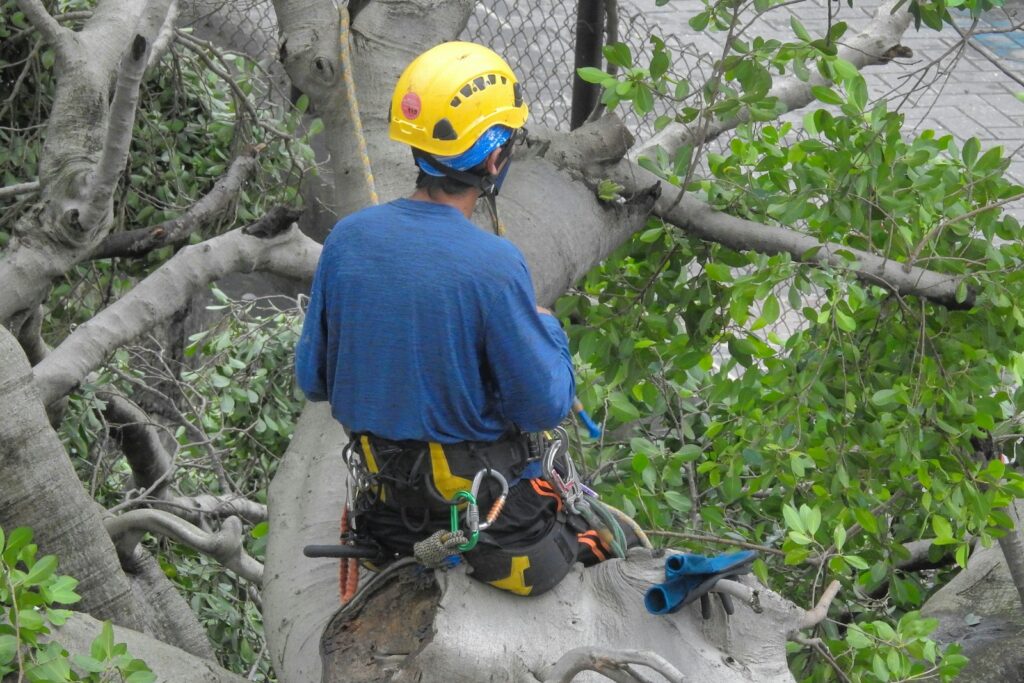
Photo by Thomas Kinto on Unsplash
Know When It’s Time to Call a Professional
If you notice a leaning tree, dead limbs, or falling branches on your property, don’t wait. The peace of mind that comes from knowing your property is safe is invaluable. We are here to provide expert tree cutting and risk management throughout Rockingham County.
Ready for a professional assessment? Contact Blue Mountain Arbor today. We’ll help you understand your trees and create a plan to keep your property safe and beautiful for years to come.
Tree Cutting Resource Guide
- How to Cut Down a Tree: Safe and Effective Tree Felling: This guide from the University of Alaska Fairbanks provides basic techniques for cutting down trees and processing them into logs and firewood. Read more here
- Tree Care & Maintenance by Arbor Day Foundation: Learn about tree health, pruning, fertilizing, and removal with advice from certified arborists. Visit the resource
- Tree Trimming & Removal Safety Fact Sheet: A detailed safety guide for tree trimming and removal, especially after storms, provided by the Texas Department of Insurance. Access the fact sheet
- Tree Trimming Safety by Sonoma County: This resource outlines methods for safe tree trimming and emphasizes the importance of skilled evaluation. Learn more here
- Tips for Safety in Trees - ALCA: The ALCA provides safety tips for tree workers, including proper clothing and chainsaw safety measures. Explore the tips
- Tree Pruning Guidelines by the International Society of Arboriculture: A comprehensive guide to proper tree pruning techniques to ensure tree health and safety. Visit the ISA website
- Chainsaw Safety Tips by Stihl USA: A practical guide to chainsaw safety, including maintenance and proper usage techniques. Check it out here
These resources are excellent for anyone looking to safely and effectively manage tree cutting and maintenance tasks.