As I drive through the Shenandoah Valley, from the rocky ridges near Harrisonburg to the rolling hills around Staunton, I’m always struck by the resilience of the chestnut oak. Often called rock oak or mountain oak, this tree is a true icon of our landscape. It is also one of the most common trees in the region. It stands strong in rocky soils where other trees might struggle, providing cooling shade and a sense of permanence to the properties we cherish. As a long lived tree, its longevity makes it a legacy tree, one that connects generations.
My work has given me a deep appreciation for these sturdy giants. I’ve seen firsthand how they define a property’s character. That’s why I feel it’s so important for property owners to understand how to care for them properly. This post is my way of sharing what I’ve learned, so you can help protect and preserve the chestnut oaks on your land.
What Is a Chestnut Oak (Rock Oak)? (Quercus montana)
The chestnut oak, known scientifically as Quercus montana (and sometimes as Quercus prinus), is a key member of the white oak group within the larger beech family. Sometimes called 'oak rock,' it is part of the broader group of oak trees. Here in Virginia, you’ll hear it called by many names, including rock chestnut oak and even basket oak, a nod to its historical use. These are impressive, long-lived trees; mature trees typically grow 50–80 feet (18–22 meters) tall but can reach up to 100 feet (40–43 meters) in optimal conditions, with a rounded crown.
The oak leaf of the chestnut oak is shallowly lobed, with 10–15 rounded lobes on each margin. The upper leaf surface is dark green and leathery, and leaves are 4–7¾ inches (12–20 centimeters) long. The terminal buds are large and pointed, which helps in identification. Chestnut oak acorns are among the largest of Native American oaks, measuring ½–1¼ inches (1.5–3 centimeters) long.
Chestnut oak has the thickest, dark gray-brown, massively ridged bark of any eastern North American oak. It typically occupies intermediate to poor sites and is considered a climax species, often serving as a predominant ridge-top tree in eastern North American hardwood forests. It serves as an important wildlife food source and is valued as a resilient shade tree.
When comparing the two species, white oak and chestnut oak, chestnut oak is more adaptable to rocky, dry soils, while white oak prefers deeper, richer soils. Swamp chestnut oak, by contrast, is found in wetter bottomland habitats and has larger acorns and scaly bark, distinguishing it from chestnut oak. Their strength and longevity make them a valuable part of any landscape. They are not just another tree; they are a cornerstone of the local ecosystem, providing food and shelter for wildlife and adding significant value and beauty to our properties.
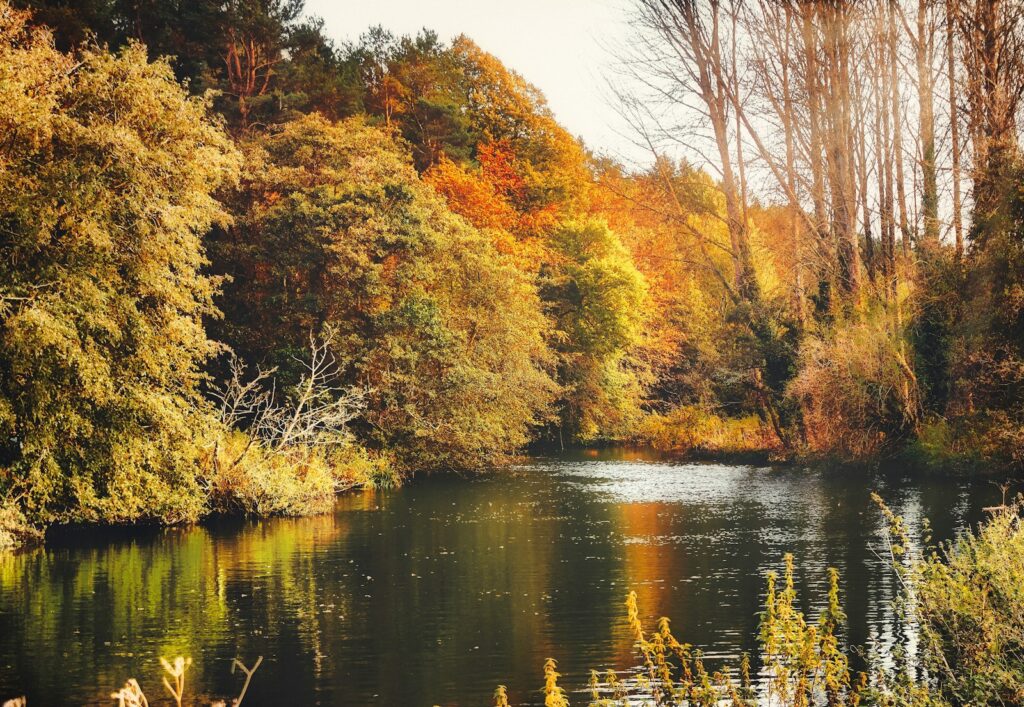
Photo by K. Mitch Hodge on Unsplash
Native Range and Where Chestnut Oaks Thrive
The chestnut oak’s native range stretches across the eastern United States, but it truly feels at home here in the southern Appalachian region. Its range extends to the southern tip of Illinois and into northern Alabama and Georgia. It has adapted perfectly to the unique terrain of the Shenandoah Valley. You’ll often find them standing tall on rocky ridges and dry sites where other species can’t get a foothold. Chestnut oak is often found on dry, rocky soils at the tops of hilly ridges.
Chestnut oak thrives in dry, rocky, acidic soils but does best in well-drained loams, and can tolerate most soils except those that drain poorly. It achieves its greatest growth on moist, well-drained soils of acidic pH. These trees thrive in full sun to partial sun. Their deep taproot system allows them to access water and nutrients even in challenging, dry soils. Chestnut oak is often found growing alongside white ash and yellow poplar in certain forest types. This is why they are so common on the mountainsides and uplands throughout our area, a testament to their rugged nature.
Identifying a Healthy Chestnut Oak
One of the most distinctive features of this tree is its bark. The mature bark is dark gray-brown, massively ridged, and is the thickest of any eastern North American oak. This thick and rugged bark helps protect the tree from environmental stressors.
In the spring and summer, the leaves are a vibrant dark green on the upper leaf surface and have a leathery texture. The leaves measure 12–20 centimeters (4+3⁄4–7+3⁄4 inches) long and have 10–15 rounded lobes on each margin, with a coarsely toothed edge that distinguishes them from the deeply lobed leaves of other oaks. In the fall, the chestnut oak displays striking fall color, with foliage turning shades of red, orange, and yellow-brown.
Around mid-spring, you may notice the subtle male flowers appearing in dangling catkins, while the smaller female flowers are positioned near the stem. Healthy chestnut oaks produce large acorns on short stalks; these acorns are among the largest of Native American oaks, measuring 1.5–3 centimeters (1⁄2–1+1⁄4 inches) long. Chestnut oak acorns drop 2-5 weeks before many other native oak species, often yielding heavy crops in good years, which are a vital food source for local wildlife.
Chestnut Oaks vs. Other Common Oaks
It can be easy to confuse the chestnut oak with other members of the oak family, or oak trees, such as the white oak, black oak, or chinkapin oak. While all are valuable, the chestnut oak is uniquely suited for the dry, rocky soils common in our area. When comparing these two species—white oak and chestnut oak—the white oak typically grows taller, develops a deeper root system, and adapts better to a wider range of site conditions, while chestnut oak excels on drier, rockier slopes.
It's also important to distinguish chestnut oak from swamp chestnut oak, which prefers wetland or bottomland habitats, has larger acorns, and features scaly bark and broader leaves, unlike the chestnut oak's dry-site preference and different bark texture.
Chestnut oak is not usually considered a high-quality timber tree due to its branching and growth form, but it can be valuable when grown in better conditions. Its ability to prosper on these challenging sites sets it apart from species like the scarlet oak, which may prefer different conditions. Understanding these differences is key to providing the right care.
The Importance of Conservation and Protection
Chestnut oak (Quercus montana), often called rock oak or rock chestnut oak, is more than just a familiar sight on the rocky slopes of the Shenandoah Valley—it’s a cornerstone of our southeastern forest ecosystem. As a proud member of the white oak group, this species supports a remarkable diversity of life and helps maintain the health and balance of our woodlands.
One of the chestnut oak’s greatest contributions is its acorn production. These large, nutritious chestnut oak acorns are a vital food source for wildlife, including wild turkey, deer, and countless small mammals. The annual acorn yield helps sustain these populations, especially through the lean months, making the chestnut oak an essential part of the local food web.
Beyond its ecological role, the chestnut oak is valued for its strong, durable wood—prized in the timber industry for its resistance to decay and versatility. This economic importance, combined with the tree’s beauty and shade, makes it a cherished feature on many properties throughout the region.
However, the future of the chestnut oak is not guaranteed. Threats like oak wilt and the two-lined chestnut borer can weaken or even kill these trees, while chestnut blight remains a concern for related species. The loss of chestnut oak would not only disrupt the ecosystem but also diminish the genetic diversity that comes from its ability to hybridize with other oaks, such as Quercus prinus and Quercus alba.
That’s why conservation and protection efforts are so critical. Organizations like the USDA Forest Service and the Southeastern Forest Experiment Station are leading the way with research on chestnut oak growth, acorn production, and best management practices. Their studies help us understand how to encourage healthy regeneration, manage threats, and ensure these trees continue to thrive. The Morton Arboretum and other institutions also provide valuable guidance on proper tree care, from planting in well-drained soils and full sun to regular, professional pruning.
As landowners, we can play a direct role in this conservation effort. Planting chestnut oaks in suitable habitats, practicing selective logging, and supporting reforestation projects all help maintain healthy populations. By working with local arborists and following science-based recommendations, we can protect these iconic trees from disease and pests, and preserve their legacy for future generations.
Together, through informed stewardship and community collaboration, we can ensure that the chestnut oak remains a vital, living part of our forests and landscapes—providing shade, beauty, and life for years to come.
Common Threats to Chestnut Oaks in the Shenandoah Valley
Even these tough trees face challenges. One of the most serious is oak wilt, a fungal disease that can be fatal. All oaks can carry oak wilt, but the fungus is often spread by beetles attracted to fresh wounds on the tree. This is why the timing of pruning is so critical. Pruning during the dormant season is essential to avoid attracting beetles that may carry oak wilt and threaten the health of your chestnut oak.
Chestnut oak is susceptible to oak wilt, scale insects, and the two-lined chestnut borer. Galls caused by mites or insects are common on chestnut oak but are not harmful to the tree. The species is particularly susceptible to the twig-blight fungus Diplodia longispora and die-back caused by Botryodiplodia spp. While chestnut oak is more resistant to wood borers than most oaks, it is particularly susceptible to ambrosia beetles. Additionally, the acorns of chestnut oak are frequently infested with larvae of nut weevils and other insects.
Another threat comes from insects like the two-lined chestnut borer. These pests are particularly drawn to trees that are already under stress from drought, soil compaction from construction, or storm damage. It’s a cycle—stress weakens the tree, which in turn can attract beetles that cause further harm.
You might also wonder about the historic chestnut blight. While the American chestnut was decimated by this blight, the chestnut oak proved resistant, which is one reason it remains a dominant species in our forests today.
Why Timing Matters: Pruning and the Dormant Season
When it comes to pruning oaks, timing is everything. We strongly recommend pruning during the dormant season (late fall and winter). Pruning during the growing season creates open wounds that release a scent that can attract the beetles responsible for spreading oak wilt. By waiting until the tree is dormant, we significantly reduce this risk.
Proper pruning does more than just avoid disease; it helps maintain the tree’s structural integrity, removes weak or dead branches, and promotes healthy, balanced growth for years to come.
Our Health-First Approach to Chestnut Oak Care
At Blue Mountain Arbor, my philosophy is simple: preserve and protect whenever possible. Removal is always our last resort. I believe in approaching tree care like a surgeon approaches a patient—with precision, respect, and a focus on long-term health.
Every service begins with a thorough health assessment. Before we ever make a cut, we diagnose the tree’s condition. If removal is unavoidable due to safety risks or advanced decline, we handle it with safety-driven techniques and careful equipment use. We also manage everything from stump grinding to prevent stump sprouts to responsibly handling all debris.
Local Experience Matters With Chestnut Oaks
Caring for trees in the Shenandoah Valley requires local knowledge. Understanding the specific soil types, climate patterns, and native species here makes all the difference. We combine our hands-on experience with guidance from trusted institutions like the USDA Forest Service and the Morton Arboretum to ensure our practices are based on the latest arboricultural science. This regional expertise allows us to protect your mature oaks for the long term.
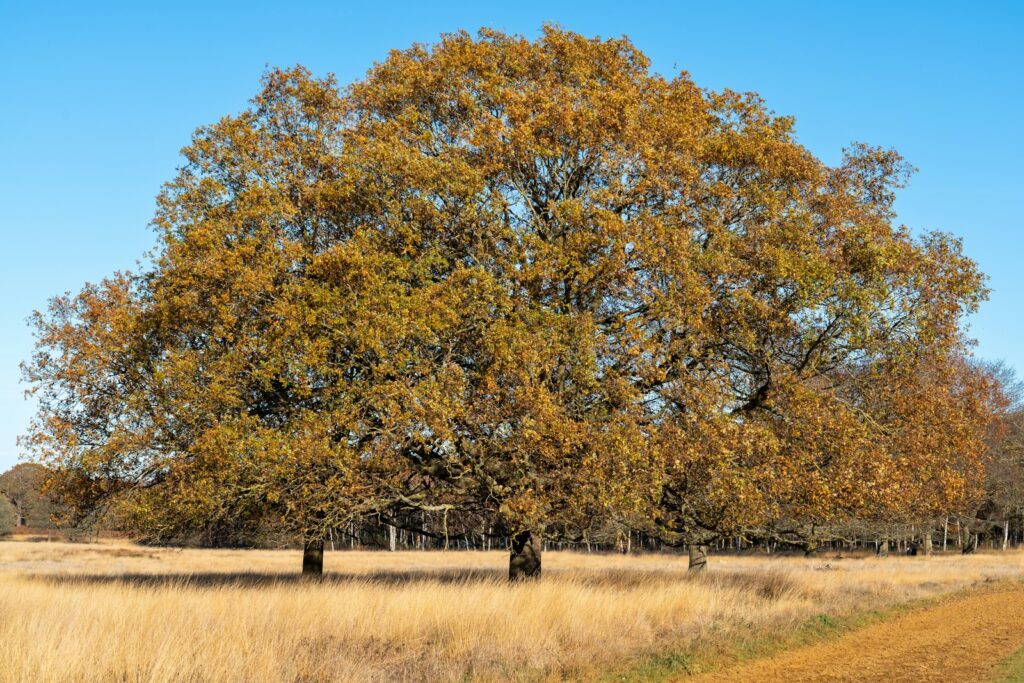
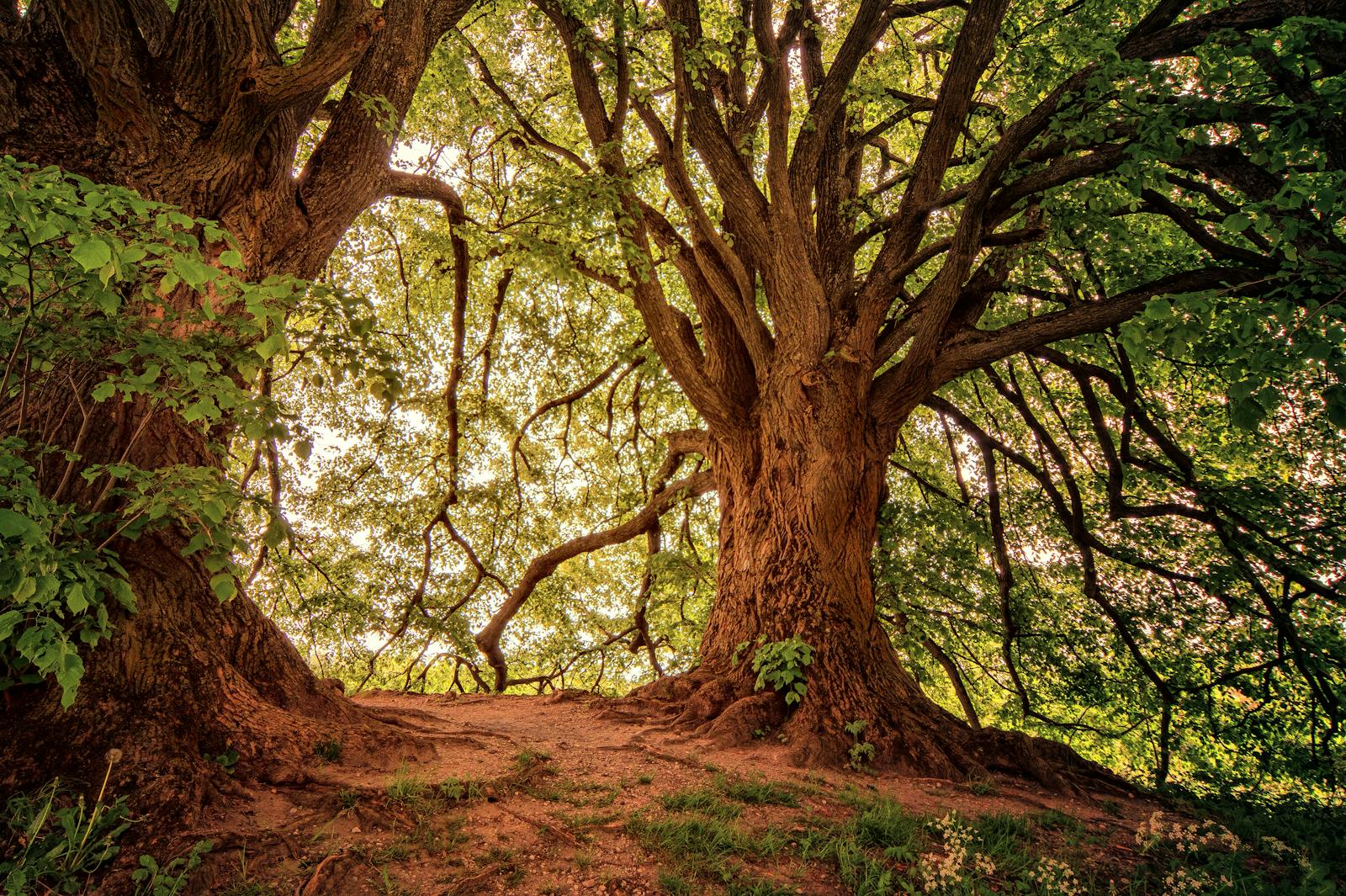
Photo by Tomasz Zielonka on Unsplash
When to Call a Professional Tree Care Team
It’s always better to be proactive. If you notice warning signs like thinning in the canopy, dead branches, damaged bark, or a sudden decline in acorn production, it’s time to call for an assessment. Addressing these issues early can often save a tree that might otherwise be lost. Most importantly, if a large oak is near your home, driveway, or other structures, professional oversight is essential for safety.
A Note on Credentials and Trust
I believe in complete transparency with my clients. I am currently working toward becoming an ISA Certified Arborist and am dedicated to continuous learning. Blue Mountain Arbor is a proud member of the International Society of Arboriculture (ISA) and the Tree Care Industry Association (TCIA). Our team includes TCIA-certified staff who are involved in our work, ensuring that every job is guided by professional standards and a commitment to safety and excellence.
Protecting a Legacy Tree
Chestnut oaks are more than just trees; they are a vital part of our natural heritage in the Shenandoah Valley. Protecting these iconic, long-lived giants is a responsibility I take seriously. As your local partner in tree care, my focus is on ensuring the health, safety, and natural beauty of your property for years to come.
If you have a chestnut oak you’re concerned about, or if you just want to ensure it stays healthy for the next generation, please don’t hesitate to reach out. I would be happy to provide an evaluation and help you care for your property’s living legacy.