It’s a sound you never want to hear—the sharp crack followed by a heavy thud that wakes you in the middle of a stormy night. Your first thought is, "What was that?" Your second is, "Please don't let it be the old oak tree." A look outside confirms your fears: a massive limb is resting on your roof, or maybe the entire tree has fallen, blocking your driveway.
These moments are stressful and overwhelming. As an arborist serving the Shenandoah Valley, I know that feeling all too well from the calls I receive. But I also know that emergency tree situations, while alarming, are entirely manageable when handled with a calm, safe, and professional approach. Quick, safe response is a core part of what we do every day.
What Counts as Emergency Tree Services?
Emergency tree services are needed anytime a tree or its branches pose an immediate threat to people or property. It’s not just about cleanup; it’s about safely resolving a dangerous situation. If a tree issue feels urgent, it probably is.
Situations that require immediate attention include:
- Fallen trees blocking driveways, roads, or access to your home.
- Dangerous trees that are visibly leaning toward your house, garage, or other structures.
- Trees that have fallen on or become entangled with power lines, which can cause power outages and create an extreme electrical hazard.
- Hanging limbs or large, broken branches dangling precariously over walkways, roofs, or play areas.
- Significant storm damage after high winds, heavy snow, or ice storms have compromised a tree's stability.
The rule is simple: if the situation presents an immediate hazard, it’s an emergency.
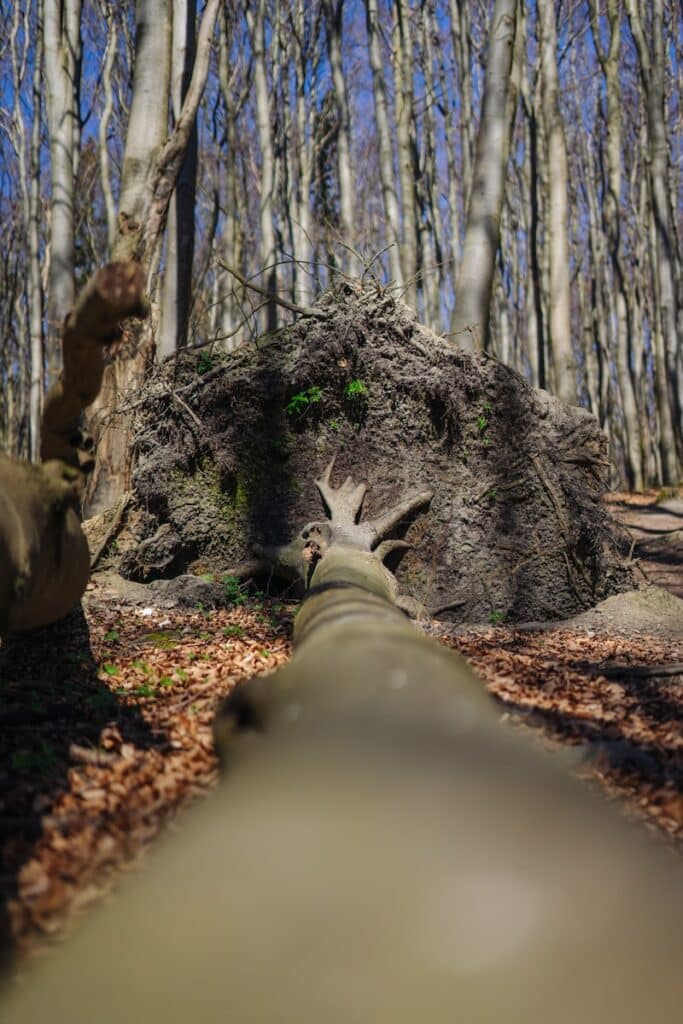
Photo by Robert | Visual Diary on Unsplash
Common Scenarios I See During Emergency Tree Removal
In my years of service, I’ve seen just about every tree-related emergency imaginable. These common scenarios highlight how quickly a situation can become dangerous if ignored.
I often get calls about trees completely uprooted after a night of severe weather, their root systems exposed. Other times, it's large broken branches that have become lodged on a roof, threatening to cause structural damage. I’ve also handled many cases of damaged trees splitting right down the middle or leaning precariously after the ground becomes saturated from a storm. Dead trees are particularly risky, as they can collapse without warning during high winds.
After the storm passes, the need for debris cleanup is urgent to restore safety and order to a property. Ignoring these issues allows a bad situation to get much worse.
Safety Measures Every Property Owner Should Take Before We Arrive
When you're facing a tree emergency, your first instinct might be to inspect the damage or start clearing it away yourself. Please don’t. Your safety is the top priority.
Before professional help arrives, follow these critical safety measures:
- Keep all people and pets far away from the affected area.
- Never touch or approach a tree that is near or in contact with power lines. Call your utility company first, then an arborist.
- Avoid getting close to the tree to inspect the damage. The tree or its branches could shift unexpectedly.
- Do not attempt a DIY removal. Tree work requires specialized equipment and an understanding of physics, tension, and weight distribution. Using rigging systems and other tools without training creates extremely dangerous situations.
Waiting for a trained team is the best way to prevent further damage or, worse, serious injury. Prompt action from a professional is key.
How Our Emergency Tree Removal Process Works
Our Immediate Response
When you call Blue Mountain Arbor for a tree emergency, our immediate response is to get to your property as quickly as possible. We serve the entire Shenandoah Valley and understand that time is critical. We’ll evaluate the tree's condition, assess the layout of your property, and identify all potential hazards. Our goal is to restore your property’s safety and help you get your life back to normal with minimal disruption.
Removing Fallen and Dangerous Trees Safely
Once we have a clear plan, our work begins. We approach every removal with a methodical, step-by-step process:
- Assess the Risks: We start by analyzing the complex situation, identifying pressure points, and understanding the structural risks of the hazardous tree.
- Use the Right Tools: We use specialized tools, rigging systems, and wood chippers to manage the work safely and efficiently. This allows us to control how and where the tree sections fall.
- Protect Your Property: Our highly trained arborists are skilled at safely reaching tricky areas and protecting nearby structures, landscaping, and utilities from further damage.
Cleanup and Additional Services
A stressful event isn't over until the mess is gone. Our service includes thorough debris cleanup, so you aren’t left with a pile of branches and logs. If needed, we also offer stump grinding to fully remove the stump and prevent issues like soil erosion. We take pride in leaving your property clean, helping you breathe a little easier after the emergency has passed.
Warning Signs a Tree Needs Immediate Attention
Sometimes, a tree gives warning signs that it’s becoming a hazard. Addressing these signs can prevent a disaster. Keep an eye out for:
- The tree is suddenly leaning or shifting its position.
- You see deep cracks at the base of the trunk or along major limbs.
- Large limbs are hanging or appear split from the trunk.
- Mushrooms or other fungal rot are growing at the base.
- The soil around the roots is heaving or lifting.
- The canopy looks unusually heavy, especially after a storm.
- You notice large sections of bark peeling off or sudden leaf dieback.
- Branches are growing too close to your roof, sheds, or other structures.
Catching these issues early can save you from costly repairs and protect your property from serious damage.
How Proper Pruning Prevents Tree-Related Emergencies
The best way to handle an emergency is to prevent it from happening. Proper, routine pruning is one of the most effective ways to reduce the risk of storm breaks. By performing structural pruning, cleaning out the crown, and removing hazardous branches, we help a tree develop a stronger, more resilient structure that can better withstand high winds and heavy snow. Investing in ongoing care is almost always cheaper and safer than dealing with emergency situations down the road.
Why You Should Call Arborists for Emergency Services
In an emergency, you need someone with the right training and experience. Arborists bring a deep knowledge of tree biology, allowing them to accurately identify immediate hazards that others might miss. We have access to the right equipment, including cranes and advanced safety systems, to handle dangerous trees effectively. Calling a professional not only minimizes damage but, most importantly, prevents injuries.
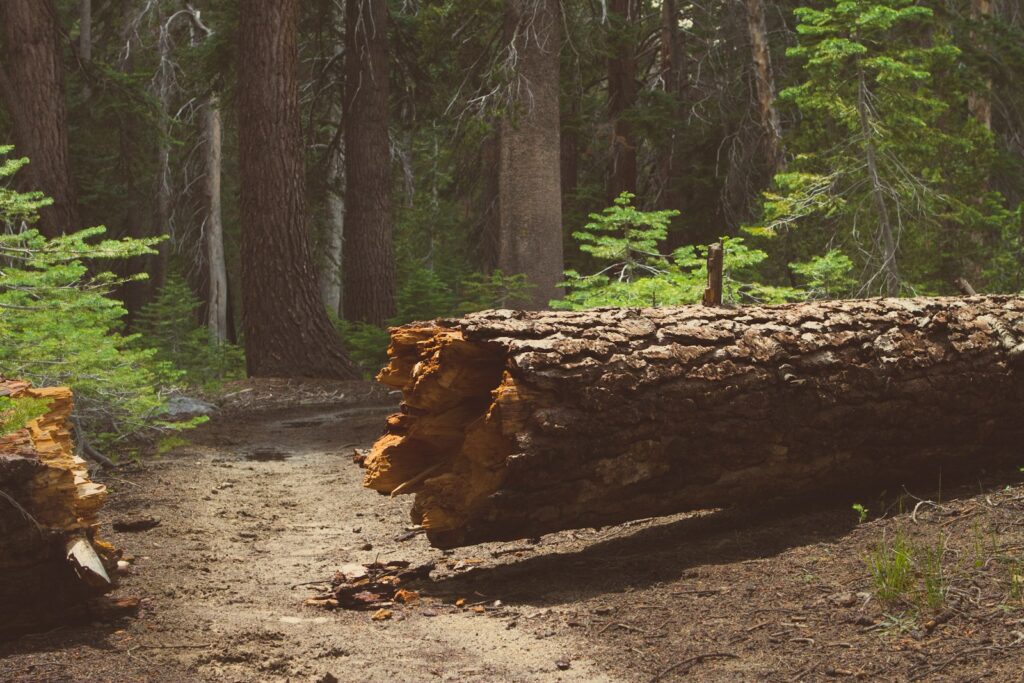
Photo by Joe Dudeck on Unsplash
What Sets Blue Mountain Arbor Apart
When disaster strikes, I show up prepared. Our reliable service, quick response time, and clear communication are cornerstones of our work. As a local company, our expertise is rooted in the specific soils, tree species, and storm patterns of the Shenandoah Valley. We focus on preserving trees when we can and removing them with the utmost care when we must.
We’re available year-round because we know tree emergencies don’t stick to a schedule. Our reputation is built on professional tree work and a genuine respect for our customers, their homes, and their peace of mind. We approach every job with a thoughtful plan, not a careless rush.
How to Prevent Future Damage and Protect Your Property
Once the immediate crisis is over, let’s talk about the future. I can help you create a plan to protect your property moving forward. This might include regular pruning schedules, health assessments to catch problems early, or the strategic removal of dangerous trees before they fail. Simple inspections of roots and soil can also make a big difference, especially in preparing for storms, high winds, and winter weather.
Your Safety Comes First
In any tree emergency, your safety and peace of mind are what matter most. Don’t hesitate to reach out at the first sign of a problem. Whether you need help with storm prep, a health inspection, or long-term care, we’re here for you.
Contact Blue Mountain Arbor for fast, professional emergency tree services you can count on.
All About Tree Care
- Arbor Day Foundation: A trusted resource for tree planting guides, care tips, and information on tree species. They also offer tools to help you select the right tree for your region.
- International Society of Arboriculture (ISA): TreesAreGood.org - This site provides educational resources on tree care, pruning, and hiring arborists for professional assistance.
- National Wildlife Federation (NWF): Learn how to create wildlife-friendly landscapes, including tips on planting and maintaining trees to support local ecosystems.
- University Extension Programs: Many universities, such as Clemson Cooperative Extension or Penn State Extension, offer free tree care guides, pest management advice, and regional planting tips.
- Tree City USA Program: A program by the Arbor Day Foundation that provides resources for communities to grow and maintain healthy urban forests.
- USDA Forest Service: The USDA Forest Service offers a wealth of information on tree health, pest management, and urban forestry initiatives.
- Tree Care Industry Association (TCIA): A great resource for learning about tree care safety, industry standards, and finding accredited tree care professionals.